2025-12-13
Why AI Presentation Makers Can't Know Your Organization
Your templates already contain organizational context—AI just needs to populate them, not learn them
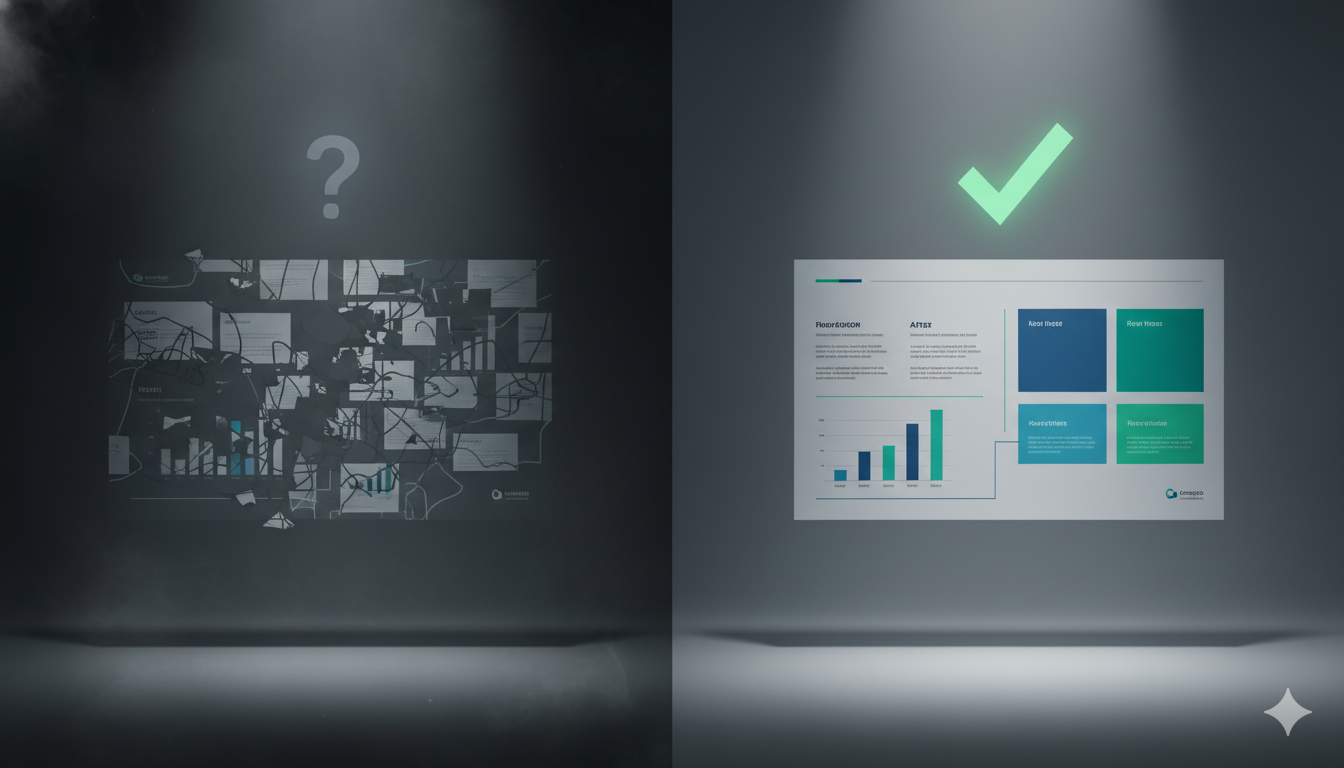
Every AI presentation maker has the same blind spot: it doesn’t know your organization. Your industry uses specific terminology. Your company has particular methodologies. Your clients expect certain frameworks. Your brand voice reflects distinct personality. This organizational context determines what resonates with your audiences and what falls flat.
When teams evaluate AI presentation maker tools, they discover a fundamental limitation: AI doesn’t understand your organizational context. It doesn’t know your company’s history, your competitive positioning, your internal communication style, or the nuances that make your presentations yours. From-scratch generation produces presentations that feel generic because the AI lacks the context that makes communication authentic.
This widespread problem affects presentation quality across industries. AI presentation tools struggle to understand human subtleties such as humor and sarcasm, lacking deep contextual understanding and the organizational nuances that define brand identity. Investment banks receive pitchbooks missing deal-specific terminology. Marketing agencies get proposals that don’t reflect brand voice. Consultants see methodology descriptions that sound like everyone else’s.
But here’s the insight that changes everything: you don’t need AI to understand your organizational context. Your proven presentation templates already contain that context—embedded in their structure, encoded in static sections, reflected in their frameworks. The best AI presentation maker approach doesn’t try teaching AI your context. It works within templates where context already lives. Understanding the fundamental differences between template preservation and from-scratch generation is essential for organizations evaluating AI presentation solutions. For comprehensive analysis of how AI presentation generator technology preserves existing templates while delivering intelligent automation, our pillar guide examines the core principles driving this transformation.
Why AI Presentation Makers Can’t Learn Organizational Context
From-scratch generation tools approach every presentation as a blank slate. You provide content, the AI generates slides, and the output contains information organized according to the AI’s training data. This works for generic presentations. It fails completely when organizational context determines what “good” looks like.
AI Training Doesn’t Include Your Company
Large language models train on massive datasets of public information—books, articles, websites, generic business documents. This training enables impressive general capabilities. It provides zero understanding of your specific organization.
The AI doesn’t know your company’s positioning versus competitors. It hasn’t learned your methodology frameworks or service delivery approaches. It can’t recognize your brand voice or communication style. When you ask the AI to generate a presentation, it produces content based on what presentations generally contain—not what your presentations specifically require.
AI-generated content can feel generic and uninspired without personalization, lacking the depth that comes from understanding your specific organizational context. The presentations contain accurate information but miss the organizational fingerprint that makes communication authentic. An investment bank receives pitchbooks that sound like they could come from any firm. A marketing agency gets proposals that don’t reflect their creative approach.
Context Takes Years to Develop, AI Gets Minutes
Organizational context develops through years of experience, client interactions, market positioning, and strategic decisions. Your proven terminology evolved through countless client conversations. Your methodology frameworks represent refined approaches tested through real engagements. Your communication style reflects brand development spanning years.
Typical AI for presentations receives the following input—a prompt describing what you need and maybe some source documents. Expecting AI to absorb years of organizational context from minutes of interaction isn’t reasonable. The context gap doesn’t reflect AI limitations—it reflects realistic expectations about what any tool can accomplish without deep organizational knowledge.
This creates an impossible situation for from-scratch presentations maker tools. They need organizational context to generate authentic presentations. They have no practical way to acquire that context. The result: presentations that contain all the right information arranged in professionally acceptable ways but completely missing the organizational character that makes communication effective.
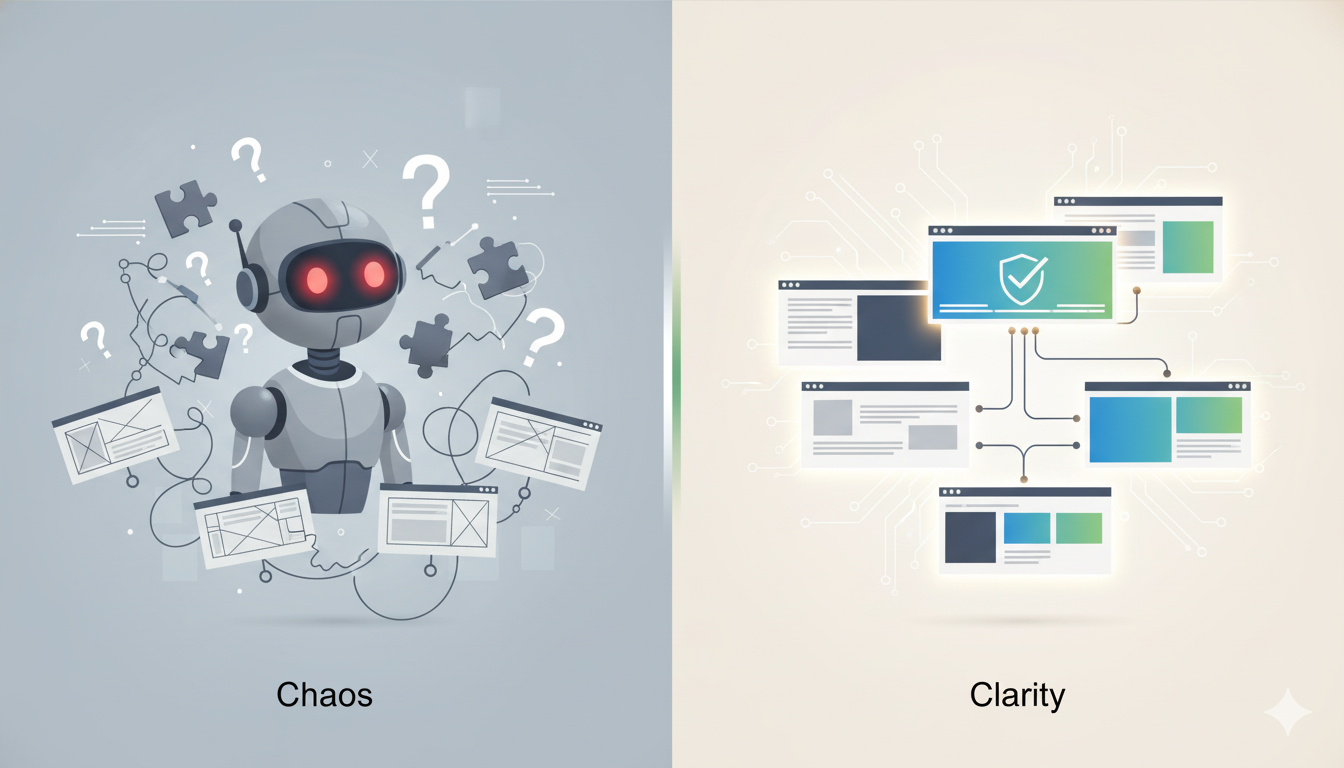
Generic Voice Doesn’t Reflect Your Brand
Brand voice represents sophisticated organizational context—the personality that comes through in all communications. Some companies communicate formally and technically. Others adopt conversational accessible tones. Brand voice reflects strategic positioning decisions about how organizations want audiences to perceive them.
AI presentation maker tools generate content in neutral professional voice by default. This generic tone works adequately for straightforward information delivery. It fails when brand differentiation depends on communication style. A creative agency’s playful innovative voice disappears. A law firm’s authoritative precise tone goes missing. The presentations read like they could come from anywhere because the AI’s default voice belongs nowhere.
Some platforms let you specify tone in prompts—“use conversational tone” or “write formally.” These adjustments modify surface-level language choices without capturing the subtle voice characteristics that define brand identity. Your organization’s voice isn’t just “conversational” versus “formal”—it reflects specific word choices, sentence structures, rhetorical patterns, and stylistic preferences developed over years of brand communication. This brand consistency challenge is why most AI presentation makers destroy brand identity when they force organizations to rebuild presentations from scratch.
Why Teaching AI Your Context Doesn’t Solve The Problem
Organizations recognize the context gap and often ask: can’t we just train the AI on our organizational information? Feed it our past presentations, company documentation, brand guidelines, and methodology descriptions so it learns our context?
This approach sounds logical. The practical challenges make it unworkable for most organizations.
The Training Data Volume Problem
Effective AI training requires vast amounts of data. The language models powering AI presentation maker tools trained on hundreds of billions of words. Teaching an AI your organizational context would require similar scale—thousands of your presentations, years of internal documentation, extensive brand materials.
Most organizations don’t have this volume of documentation in machine-readable formats. Even organizations with extensive content libraries find that training custom AI models requires technical expertise and computational resources beyond their capabilities. The investment needed to train AI on organizational context exceeds what most businesses can justify for presentation automation.
The Maintenance Burden
Organizational context evolves constantly. Your positioning changes as markets shift. Your methodologies improve through practice. Your brand voice adapts to audience feedback. An AI trained on your context today becomes outdated as your organization evolves.
Maintaining current organizational context in AI training data requires continuous updating. Every significant change to your messaging, methodology, or positioning needs reflecting in the training data. This creates ongoing maintenance requirements that most organizations cannot sustain.
The Data Privacy Concern
Training AI on organizational information means uploading sensitive business data to external systems. Your competitive positioning, client engagement approaches, proprietary methodologies—all become training data for AI models. Many organizations face compliance restrictions preventing this type of data sharing. Even without regulatory barriers, exposing strategic business information to train AI models creates risks most companies cannot accept.
How Templates Already Contain Your Organizational Context
The fundamental insight that changes everything: your organizational context doesn’t need teaching to AI because it already exists in your proven templates. Years of refinement, strategic decisions, and organizational knowledge are encoded in template structure, static content, and design choices. Template-first automation preserves this embedded intelligence rather than discarding it.
Static Sections Preserve Your Voice
Every presentation template contains sections that remain consistent across presentations. Company descriptions, team credentials, methodology overviews, service capabilities, legal disclaimers—these sections express organizational context in your exact language, refined through years of use.
When LLeMental generates presentations from your templates, these static sections remain untouched. Your company description maintains the precise positioning language you’ve developed. Your methodology section preserves the exact terminology that resonates with your market. Your brand voice in static content continues exactly as written.
This preservation happens automatically when LLeMental analyzes your template during upload. The platform works directly within your template structure, keeping fixed content — company descriptions, methodology sections, legal disclaimers — exactly as written, while generating new content where it naturally belongs.
Template Structure Reflects Strategic Frameworks
Your proven templates encode organizational strategic frameworks through their structure. The specific slide sequence in your proposals reflects your sales methodology. The section organization in your pitchbooks embodies your analysis approach. The flow of your client presentations demonstrates your engagement framework.
This structural encoding preserves organizational methodology without requiring AI to understand it. When an AI presentation maker works within your template rather than generating from scratch, the strategic framework remains intact automatically. Your methodology section maintains its position in the sequence you’ve proven works. Your framework diagrams stay exactly as designed. The strategic logic your template embodies continues functioning perfectly.
From-scratch generation loses this structural intelligence because it creates new organization rather than preserving existing frameworks. Template-first automation maintains it automatically because your template’s structure is the framework.
Proven Terminology Lives in Your Templates
Every industry and organization develops specific terminology—the words and phrases that carry precise meaning within that context. Legal firms use particular case law citations and procedural terms. Investment banks reference specific valuation methodologies and transaction structures. Marketing agencies describe campaign frameworks and creative approaches using terminology that resonates with their market.
Your presentation templates contain this terminology in static sections and serve as context for dynamic sections. When LLeMental generates content for your templates, the AI uses your template’s existing content and your provided context to generate content that aligns with your terminology and style.
This terminology consistency happens naturally through template preservation. Your static sections use your exact terminology. Dynamic sections generate within context established by those static sections. The presentations maintain consistent organizational voice without requiring the AI to learn terminology from scratch.
How LLeMental Preserves Organizational Context
LLeMental’s approach recognizes that organizational context already exists in your proven templates. Rather than attempting to teach AI your context, the platform preserves templates where context lives and generates content directly within your template where it needs to change.
Template Understanding Happens Automatically
When you upload a presentation template to LLeMental, the platform automatically analyzes the file and works directly within it—no setup or manual configuration required.
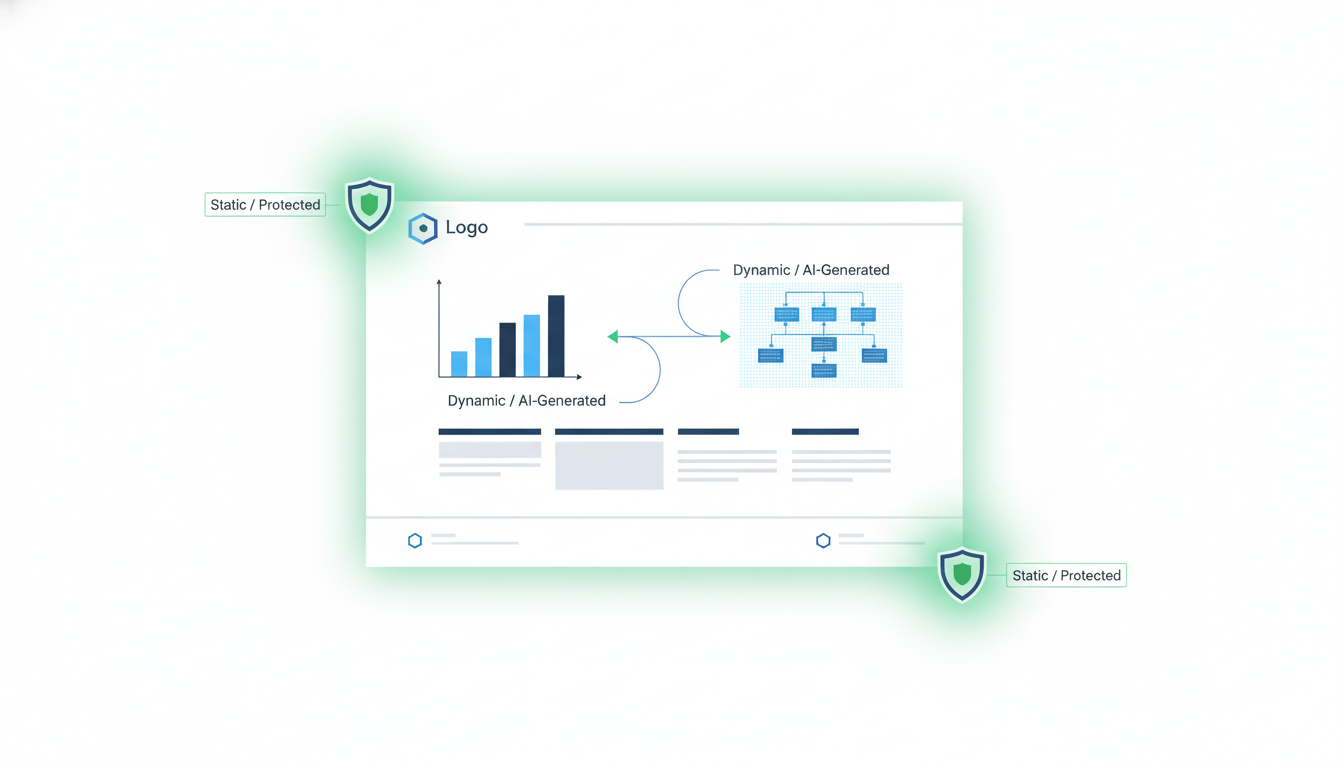
Your template already defines what should stay the same and what typically changes. Elements like logos, company descriptions, methodology frameworks, and legal disclaimers remain exactly as written. These sections carry your brand voice, positioning, and structure—and they are preserved in every generated presentation.
At the same time, LLeMental generates new content where it naturally belongs—filling in client-specific details, analysis, summaries, and recommendations based on the context you provide.
This means your presentations maintain the exact structure and language you’ve already proven works. The AI isn’t restructuring your slides or rewriting your core messaging—it’s operating within your template, not replacing it.
This approach also handles real-world complexity. Most templates mix fixed and variable content on the same slide—like a static methodology alongside client-specific insights. LLeMental works within that structure seamlessly, preserving what should remain unchanged while generating what needs to adapt.
For detailed guidance on using your existing PowerPoint and Word templates with AI—no rebuilding or setup required, our step-by-step guide walks through the simple process.
Optional Instructions for Additional Control
If you want additional control over how content is generated, you can optionally provide instructions before generating.
These instructions apply across the entire presentation and can guide tone, format, or level of detail—for example, specifying executive tone, concise bullet points, or data-driven language.
This isn’t about configuring individual sections or teaching the AI your organization from scratch. Your template already provides that context. Instructions simply refine how new content is written within that existing structure.
Because your templates contain your terminology, frameworks, and messaging, the AI naturally generates content that aligns with your organization—without requiring detailed setup or per-slide input.
Multi-Source Integration Provides Project Context
Beyond organizational context embedded in templates, presentations require project-specific context—information about the particular client, opportunity, or situation for this specific presentation. From-scratch tools struggle with this context too, generating generic content that doesn’t reflect project specifics.
LLeMental solves project context through multi-source document processing. Upload client discovery notes, competitive research, project requirements, financial data, and any other relevant information. The AI processes all sources simultaneously, generating content that reflects both organizational context from your template and project context from source documents.
For a proposal’s client challenges section, the AI combines your template’s proven challenge framework with specific pain points from discovery notes. For competitive positioning, it uses your template’s comparison structure while populating with research about this particular competitive situation. Organizational and project context work together, creating presentations that sound like your company talking about this specific opportunity.
The Practical Reality: Context Lives in Templates, Not Training
The organizational context problem reveals fundamental differences between approaches to AI presentation maker automation. From-scratch generation treats context as something AI must learn. Template-first automation recognizes context already exists in proven templates.
This distinction determines whether AI enhances your presentations or produces generic approximations. Teaching AI your organizational context through extensive training proves impractical for most organizations. Working within templates where context already lives proves immediately practical for everyone.
Your templates encode years of organizational knowledge—brand voice in static sections, strategic frameworks in structure, proven terminology in content, strategic sequencing in slide order. This embedded intelligence represents institutional knowledge that should be preserved, not discarded for AI-generated alternatives.
The best AI for presentations works with this intelligence rather than replacing it. For organizations seeking comprehensive understanding of how different automation approaches handle business communication, our analysis of AI presentation maker options for professional use examines template preservation versus from-scratch generation in detail.
Ready to preserve your organizational context while adding AI efficiency? LLeMental’s template-first approach maintains the context embedded in your proven templates.
Schedule a Demo with the LLeMental team to experience how template preservation keeps your organizational voice, frameworks, and terminology intact while AI handles variable content population — and see why embedded context beats attempted AI training.
Questions about how templates preserve organizational context? Contact our team for a demonstration using your actual presentation templates—we’ll show you exactly which sections contain your embedded context and how template-first automation preserves it perfectly.